
Why Investors Are Paying Attention to Drystack Marina Developments
Why Investors Are Paying Attention to Drystack Marina Developments
Across the waterfront industry, a growing number of investors, developers, and ownership groups are reevaluating how marina assets fit within long-term real estate and operational portfolios.
What was once viewed primarily as a niche hospitality or recreational sector is increasingly being recognized as a sophisticated asset class shaped by land scarcity, operational efficiency, customer demand, and evolving waterfront economics.
At the center of that conversation is drystack marina investment.
Modern drystack marina developments are attracting attention because they combine several factors investors increasingly value:
- Higher-density land utilization
- Operational scalability
- Premium customer demand
- Long-term waterfront scarcity
- Resilience-focused infrastructure
- Mixed-use integration potential
As coastal markets continue evolving, many investors are beginning to view marina assets less as simple storage facilities and more as long-term waterfront infrastructure investments.
Why Drystack Marinas Are Attracting Investment
Several major industry shifts are driving increased investor interest in drystack marina development opportunities.
Limited Waterfront Availability
Waterfront land remains one of the most constrained asset categories in commercial real estate.
In many Florida and coastal markets, developable waterfront property is increasingly difficult to acquire, entitle, or reposition.
That scarcity alone has increased interest in marina real estate development strategies that maximize operational efficiency within a limited footprint.
Drystack marina development allows owners to increase storage density while preserving valuable waterfront access and operational flexibility.
For investors evaluating long-term waterfront opportunities, early Site Acquisition strategy and land utilization planning have become increasingly important.
Increased Boating Participation
The boating industry has experienced sustained participation growth over the last several years, particularly in coastal lifestyle markets.
At the same time, many traditional marinas face:
- Aging infrastructure
- Capacity limitations
- Operational inefficiencies
- Growing maintenance exposure
- Increased customer expectations
That combination is creating demand for newer, more operationally sophisticated marina environments designed around convenience, efficiency, and long-term performance.
Higher Revenue Density
One of the biggest drivers behind drystack marina investment is the ability to generate more operational capacity within a smaller footprint.
Traditional wet-slip layouts require significant acreage for circulation, dockage, and maneuvering.
Modern drystack facilities can improve density through:
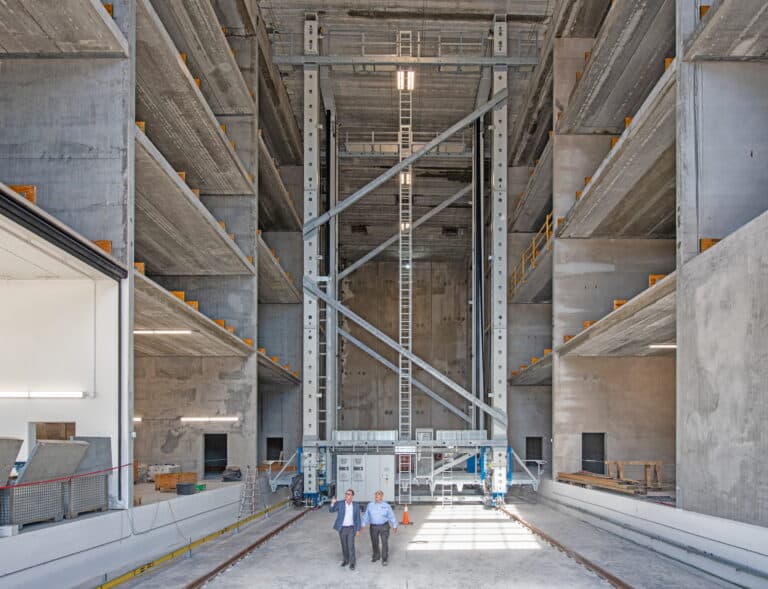
- Vertical storage
- Multi-deep layouts
- Reduced drive aisles
- Organized retrieval systems
- Automated storage integration
That density can create stronger long-term revenue potential per acre while improving operational organization.
Projects evaluating high-density waterfront strategies often integrate broader Asset Storage Solutions planning early in development.
Mixed-Use Waterfront Opportunities
Many waterfront developments are also evolving beyond standalone marina facilities.
Developers increasingly view marinas as anchor components within broader mixed-use waterfront destinations that may include:
- Hospitality
- Retail
- Restaurants
- Entertainment
- Residential components
- Lifestyle amenities
This integration can strengthen both customer experience and long-term property value.
As a result, many investors are exploring marina projects through a broader Mixed-Use Development lens rather than as isolated operational facilities.
The Economics Behind Modern Marina Development
Investor interest in marina assets is not driven solely by waterfront demand. It is also influenced by operational economics.
Maximizing Storage Capacity
Storage density directly impacts revenue potential.
Modern drystack marina planning focuses heavily on maximizing cubic storage efficiency while maintaining operational flow and customer experience.
Projects that improve space utilization may support:
- Increased vessel capacity
- Operational scalability
- Improved land efficiency
- Expanded amenity opportunities
Operational Efficiency Improvements
Operational performance has become increasingly important in marina ownership strategy.
Facilities designed around streamlined workflows, organized retrieval systems, and operational coordination are often better positioned to improve customer experience while reducing long-term inefficiencies.
This is one reason many developers are prioritizing integrated Turnkey Marina Development strategies during planning and execution.
Lower Long-Term Maintenance Costs
Older marina facilities often face significant ongoing maintenance exposure related to:
- Coastal deterioration
- Aging infrastructure
- Storm vulnerability
- Deferred capital improvements
Modern resilient marina construction strategies increasingly prioritize durability, operational efficiency, and lifecycle performance from the outset.
That long-term perspective can influence overall ownership costs and operational stability over time.
Customer Experience as a Revenue Driver
Today’s boaters increasingly expect:
- Faster retrieval
- Organized operations
- Premium service experiences
- Clean and secure environments
- Modern amenities
Customer experience is becoming increasingly tied to operational performance and long-term competitiveness.
Marina assets that improve convenience and reliability may be better positioned to attract and retain customers within competitive coastal markets.
How Automation Is Changing Marina Economics
Automation is becoming an increasingly important conversation within drystack marina investment planning.
While not every marina project requires automation, many owners are evaluating how automated systems influence density, operational efficiency, and long-term scalability.
Reduced Labor Dependency
Labor availability remains one of the marina industry’s largest operational challenges.
Automation can help reduce dependence on large forklift operations while supporting more predictable workflows and retrieval consistency.
Faster Throughput & Capacity
Automated retrieval systems may improve launch and retrieval sequencing, helping facilities manage operational demand more efficiently during peak periods.
Better Space Utilization
Automation can also reduce the amount of space required for circulation and maneuvering, creating opportunities for higher-density layouts.
Projects evaluating automation early in development often integrate Lift System Selection planning directly into structural and operational coordination.
Premium Positioning Opportunities
Automation is also increasingly associated with premium marina positioning.
High-end waterfront developments are beginning to view operational efficiency, convenience, and retrieval consistency as part of the overall customer experience strategy.
Key Risks Investors Must Evaluate
Like all real estate sectors, marina development carries unique risks and complexities.
Permitting & Entitlement Complexity
Waterfront permitting can be highly regulated depending on jurisdiction and environmental conditions.
Successful marina projects often require coordination across:
- Environmental agencies
- Coastal regulators
- Zoning authorities
- Waterfront engineering consultants
Coastal Construction Requirements
Coastal construction introduces additional considerations related to:
- Hurricane resilience
- Flood mitigation
- Corrosion exposure
- Structural durability
- Long-term maintenance
Projects that align resilience and construction strategy early are often better positioned for long-term performance.
This is one reason many waterfront owners prioritize integrated Design-Build Construction coordination.
Insurance & Storm Exposure
Insurance markets continue evolving throughout coastal regions.
Facilities designed around resilience, operational continuity, and long-term durability may be better positioned to reduce future exposure and operational disruption.
Operational Expertise
A marina is not simply a real estate project. It is also an operational business.
Long-term success depends heavily on operational planning, workflow coordination, customer experience, and ongoing performance management.
Many ownership groups increasingly integrate experienced Marina Management strategy into development planning from the earliest stages.
Why Integrated Marina Development Teams Matter
One of the biggest risks in waterfront development is fragmentation.
When planning, operations, engineering, construction, and ownership strategy evolve independently, projects often encounter coordination issues, operational inefficiencies, or unexpected cost escalation.
Integrated marina development helps align those systems early.
That alignment becomes increasingly important in projects involving:
- Drystack storage
- Automation integration
- Mixed-use waterfront development
- Hurricane resilience
- Long-term ownership planning
As marina projects become more sophisticated, investors are increasingly prioritizing development teams capable of coordinating the full lifecycle of the asset.
The Marina Partners Approach to Waterfront Development
Marina Partners approaches waterfront development through a long-term operational and investment lens.
Rather than focusing solely on construction, the team integrates:
- Feasibility and planning
- Waterfront operations
- Storage strategy
- Construction coordination
- Resilience planning
- Long-term asset positioning
That integrated approach helps align project execution with ownership objectives from the earliest stages of development.
For investors evaluating future waterfront opportunities, this often includes broader conversations around Financing & Joint Ventures as well as long-term Remarketing & Positioning strategy.
Conclusion
The marina industry is entering a new phase of evolution.
As waterfront land becomes more constrained and operational expectations continue rising, drystack marina developments are increasingly being viewed as strategic long-term infrastructure investments rather than simple storage facilities.
For investors, developers, and ownership groups, the opportunity is not only about boat storage. It is about creating waterfront assets capable of delivering operational efficiency, customer demand, resilience, and long-term value within increasingly competitive coastal markets.
To learn more about Marina Partners’ approach to integrated waterfront development and long-term marina asset strategy, Contact Us to start the conversation.

Get in Touch
Ready to plan, build, or evolve your marina? Connect with Marina Partners to discuss drystack development, marina infrastructure, or integrated waterfront projects—delivered with clarity, accountability, and long-term performance in mind.