
Hurricane-Resistant Marina Design: Building for Coastal Resilience
Hurricane-Resistant Marina Design: Building for Coastal Resilience
Coastal marina development has always required balancing performance with environmental exposure. Today, that challenge is becoming even more significant.
Rising insurance pressures, stronger storm events, operational downtime risks, and long-term maintenance concerns are reshaping how waterfront projects are planned and constructed throughout Florida and other coastal markets.
For marina owners and developers, resilience is no longer simply about surviving a storm. It is about protecting long-term operational continuity, asset performance, and investment value.
As a result, hurricane-resistant marina design has become one of the most important conversations in modern waterfront development.
Why Marina Resilience Matters More Than Ever
Marinas operate in some of the harshest environments in commercial real estate.
Salt exposure, humidity, wind, flooding, storm surge, and corrosive coastal conditions all place extraordinary pressure on waterfront infrastructure over time.
At the same time, marina owners are navigating:
- Rising insurance costs
- Increasing storm intensity
- Operational interruption risks
- Long-term maintenance demands
- Growing customer expectations
- More sophisticated waterfront assets
That combination is forcing the industry to rethink how marina facilities are designed from the ground up.
For developers planning long-term waterfront assets, resilience has become a central part of modern Turnkey Marina Development strategy.
Key Elements of Hurricane-Resistant Marina Design
Modern resilient marina construction requires far more than stronger materials. It requires a fully coordinated approach that aligns structure, operations, waterfront conditions, and long-term maintenance planning.
Elevated Structures & Flood Mitigation
One of the most important resilience strategies in coastal development is elevation.
Modern marina projects increasingly prioritize:
- Elevated finished floor elevations
- Reduced flood exposure
- Improved stormwater management
- Equipment protection strategies
- Elevated operational systems
Facilities designed above FEMA flood requirements can help reduce long-term vulnerability while improving operational recovery after major storm events.
Reinforced Concrete Construction
Concrete continues to play a major role in resilient waterfront infrastructure because of its durability and long-term performance in coastal environments.
Compared to many traditional building systems, reinforced concrete structures can offer advantages related to:
- Wind resistance
- Fire resistance
- Moisture durability
- Structural longevity
- Reduced maintenance exposure
Many modern marina projects are increasingly utilizing reinforced concrete and Design-Build Construction strategies to better coordinate structural performance with operational requirements.
Hurricane-Rated Building Systems
Coastal facilities are increasingly being designed around comprehensive hurricane-rated systems rather than isolated upgrades.
This may include:
- Impact-rated openings
- Reinforced structural systems
- Enhanced roof assemblies
- Wind-rated cladding systems
- Protected infrastructure components
Resilience works best when it is integrated throughout the entire project rather than added later as a reactive measure.
Durable Exterior Materials
Material selection also directly impacts long-term maintenance and lifecycle costs.
Coastal environments accelerate deterioration, particularly in facilities exposed to salt air, humidity, and UV exposure year-round.
Durable material strategies can help reduce:
- Corrosion
- Moisture intrusion
- Exterior deterioration
- Long-term maintenance expenses
- Operational disruption caused by repairs
Why Tilt-Wall Construction Is Gaining Attention
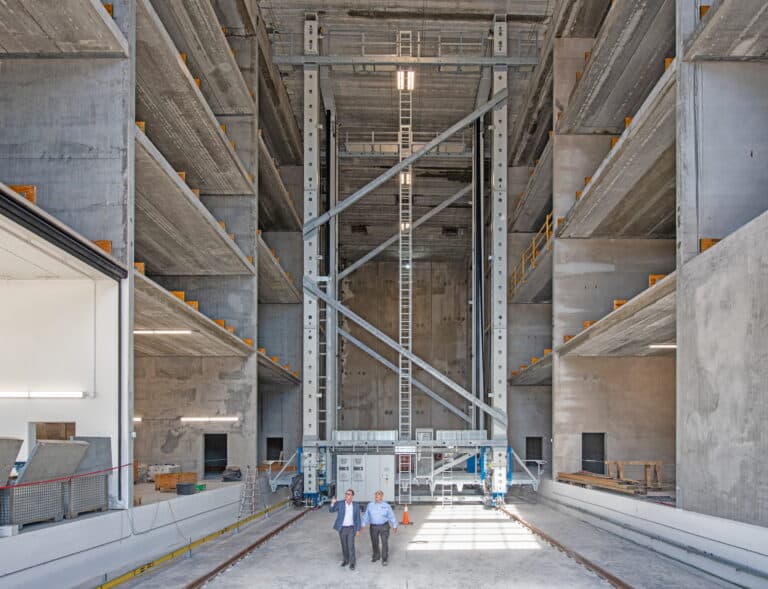
Tilt-wall concrete construction has become increasingly common in high-performance waterfront and drystack marina developments.
One reason is simple: durability matters in coastal environments.
Tilt-wall systems can provide advantages related to:
- Structural strength
- Hurricane resistance
- Long-term durability
- Fire resistance
- Reduced maintenance exposure
- Faster construction sequencing
For drystack marina projects specifically, tilt-wall construction also supports the larger structural spans and operational demands often required in high-density storage environments.
Many marina owners evaluating resilient waterfront infrastructure are increasingly integrating tilt-wall systems into broader Asset Storage Solutions and operational planning strategies.
Designing for Operational Continuity
Resilience is not only about protecting the structure itself. It is also about minimizing operational disruption after major weather events.
Modern hurricane-resistant marina design increasingly focuses on how facilities continue functioning before, during, and after storms.
Backup Power & System Planning
Operational continuity often depends on infrastructure planning beyond the building envelope.
That may include:
- Backup power systems
- Emergency operational protocols
- Equipment protection strategies
- Communication systems
- Access management planning
Efficient Boat Handling Layouts
Operational flow also impacts storm preparation and recovery.
Facilities with organized retrieval systems, efficient circulation, and streamlined workflows are often better positioned to manage pre-storm preparation and post-storm operations.
Automation & Reduced Exposure
Automation is also beginning to influence resilience conversations within the marina industry.
Automated storage and retrieval systems can help reduce:
- Congestion within storage environments
- Repetitive vessel handling
- Exposure to operational bottlenecks
- Dependence on large equipment staging areas
For projects evaluating automation, early Lift System Selection coordination is critical to ensuring the building, retrieval systems, and operational workflows function cohesively.
Long-Term Maintenance Considerations
One of the most overlooked aspects of resilient marina construction is long-term maintenance exposure.
Buildings designed around durability, material longevity, and operational efficiency are often better positioned to reduce lifecycle maintenance costs over time.
That long-term perspective is becoming increasingly important for marina owners evaluating future operational performance and asset value.
How Resilience Supports Long-Term Marina Value
Resilience is not simply an operational conversation. It is increasingly a financial one as well.
Marina assets designed for long-term durability may support advantages related to:
- Reduced operational downtime
- Improved insurability
- Lower long-term maintenance costs
- Better customer confidence
- Stronger long-term asset positioning
As waterfront development becomes more competitive, resilience is increasingly influencing how marina properties are valued, financed, and operated.
Projects focused on long-term performance often evaluate resilience alongside broader Marina Management and ownership planning strategies.
The Marina Partners Perspective on Coastal Development
Marina Partners approaches coastal marina development through a long-term operational lens.
Rather than viewing resilience as a standalone design feature, the team integrates storm protection, operational performance, construction coordination, and waterfront functionality throughout the development process.
That integrated approach includes coordination across:
- Site feasibility
- Structural design
- Operational planning
- Storage system integration
- Waterfront infrastructure
- Long-term ownership strategy
The goal is not simply delivering a marina project that meets minimum requirements. It is creating waterfront assets positioned to perform successfully for decades within demanding coastal environments.
For projects involving mixed-use waterfront destinations or high-density drystack environments, resilience planning also frequently intersects with broader Mixed-Use Development strategy and long-term site positioning
Conclusion
The future of coastal marina development will increasingly be defined by resilience.
As insurance pressures, storm exposure, and operational demands continue evolving, marina owners and developers are reevaluating how waterfront assets are designed, constructed, and maintained.
Hurricane-resistant marina design is no longer just about protecting buildings from storms. It is about protecting long-term operational continuity, customer experience, and investment performance.
For waterfront owners planning the next generation of marina infrastructure, resilience has become one of the most important investments a project can make.
To learn more about Marina Partners’ approach to resilient waterfront development and integrated marina planning, Contact Us to start the conversation.
Get in Touch
Ready to plan, build, or evolve your marina? Connect with Marina Partners to discuss drystack development, marina infrastructure, or integrated waterfront projects—delivered with clarity, accountability, and long-term performance in mind.